Hayek Lab University of Texas Medical Branch

We find the signal
before the damage.

Inflammation injures the heart, the kidney, and the metabolic system together. The Hayek Lab works out which molecules carry the inflammatory signal between organs and turns them into biomarkers clinicians can act on. We apply them where the risk is highest: in patients with atherosclerosis, diabetes, and kidney disease, and in those being treated for cancer.

Impact

Peer-reviewed publications
225
Citations
28,000+
Research funding
$10M+
Lab members, past and present
54

What we do

Two programs, one question: what does inflammation cost the patient in front of us?

01

Inflammation and Cardiovascular-Kidney-Metabolic Disease

Heart, kidney, and metabolic disease tend to strike the same patients, and inflammation runs through all three. We study the immune signals that pass from one organ to another and turn them into biomarkers clinicians can act on.

  • suPAR and the kidney: new chronic kidney disease, declining filtration, acute kidney injury, and scarring of the kidney's filters (FSGS)
  • Mechanism: APOL1, αvβ3 integrin, monocyte priming, uPAR isoforms
  • Atherosclerosis, heart failure, and the cardiorenal axis
  • Inflammation and outcomes in COVID-19 and critical illness
Read the full program

02

Patients with cancer often carry cardiovascular risk before treatment starts, and the treatment can add to it. We work out which patients are at risk, how to catch injury early, and how to treat it without taking effective cancer therapy away.

  • Immune-checkpoint-inhibitor myocarditis: diagnosis, biomarkers, outcomes
  • Anthracycline cardiotoxicity and cardioprotection
  • CAR T-cell and cellular-therapy cardiotoxicity
  • Cardiovascular care in stem cell transplantation
Read the full program

The idea

A molecule that turns immune activity into organ damage.

How suPAR carries an inflammatory signal from one organ to another Membrane-bound uPAR on myeloid, endothelial and vascular smooth muscle cells drives local inflammation and tissue remodeling. Cleavage releases soluble suPAR into the bloodstream, where it acts on distant targets through the alpha-v beta-3 integrin and RAGE receptors. Sustained, that signaling contributes to disease in the kidney, the vasculature and metabolic tissue. Membrane uPAR Local inflammation, remodeling Cleavage Soluble suPAR in the blood Kidney Vasculature Metabolic Distant signaling via αvβ3 · RAGE How suPAR carries an inflammatory signal from one organ to another Membrane-bound uPAR on myeloid, endothelial and vascular smooth muscle cells drives local inflammation and tissue remodeling. Cleavage releases soluble suPAR into the bloodstream, where it acts on distant targets through the alpha-v beta-3 integrin and RAGE receptors. Sustained, that signaling contributes to disease in the kidney, the vasculature and metabolic tissue. Membrane uPAR Local inflammation, remodeling Cleavage Soluble suPAR in the blood Distant signaling via αvβ3 · RAGE Kidney Vasculature Metabolic
Membrane uPAR drives inflammation in the tissue it sits in. Innate immune activation sheds it into the blood as suPAR, which signals to organs far from where it came from; sustained, that signaling contributes to disease there. Adapted from Reiser, Hayek & Sever, J Clin Invest 2026 and Hayek & Dryer, Circulation Research 2026.

Signature work

A decade establishing suPAR as a cross-organ driver of disease.

  1. 2015 Discovery

    Soluble Urokinase Receptor and Chronic Kidney Disease

    New England Journal of Medicine First author

  2. 2017 Mechanism
  3. 2020 Generalization

    Soluble Urokinase Receptor and Acute Kidney Injury

    New England Journal of Medicine First author

  4. 2022 Causation
  5. 2026 Synthesis
All 225 publications

Latest

What is happening now.

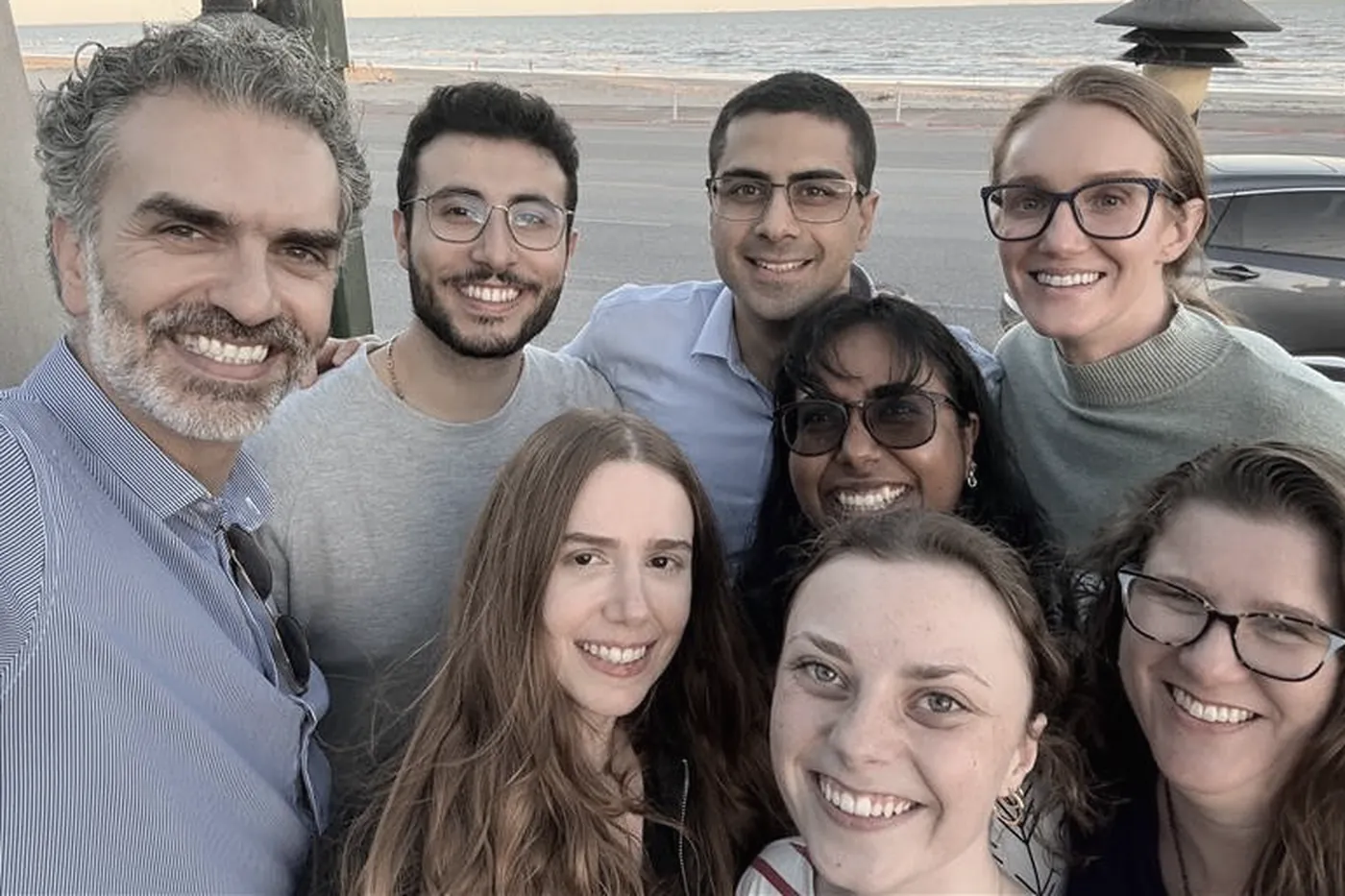
Eight members of the Hayek Lab outdoors by the water in Galveston

Physicians, scientists, and trainees.

54 people have worked in this lab, in Galveston and, before it, in Ann Arbor. Meet the team.

Work with us

We collaborate with academic groups, health systems, and industry partners.

Biomarker validation, ancillary studies to ongoing trials, and registry-based outcomes research. If you have a cohort, an assay, or a compound and a cardiovascular question, we are interested.

Partner with the lab Support our research

Gifts fund pilot studies and biospecimen collection. To direct one to this lab, contact UTMB Development or write to us.